Friday, January 13, 2006

Irish Catholics in America

Census figures show an Irish population of 8.2 million in 1841, 6.6 million a decade later, and only 4.7 million in 1891. It is estimated that as many as 4.5 million Irish arrived in America between 1820 and 1930.
Our ancestors were part of this great migration. Kate Lynch immigrated from Ireland to Pennsylvania in 1881. Her future husband, Teddy Hopkins, immigrated in 1881 or 1882. In about 1888, they were joined by Teddy's father Michael. In about 1890 the entire Hopkins family headed west, settling in Tacoma, Washington.

The Library of Congress has an interesting site about Irish-Catholic immigrants to America that can tell us more about our ancestors' experiences. Unlike many immigrants who came with money, the Irish typically were very poor:
The Irish immigrants left a rural lifestyle in a nation lacking modern industry. Many immigrants found themselves unprepared for the industrialized, urban centers in the United States. Though these immigrants were not the poorest people in Ireland (the poorest were unable to raise the required sum for steerage passage on a ship to America), by American standards, they were destitute.
They lived in tiny, cramped tenement buildings in the cities which were hotbeds for diseases such as cholera, typus, and tuberculosis. With poverty came the social problems of violence, alcoholism and crime. Their wilolingness to work for very low wages put them into conflict with other working class immigrants. They were also discriminated against for their Catholic faith.

Because there were so many Irish-Americans in the cities, they became a powerful political force.
Irish-American political clout led to increased opportunities for the Irish-American. Looking out for their own, the political machines made it possible for the Irish to get jobs, to deal with naturalization issues, even to get food or heating fuel in emergencies. The political machines also rewarded their own through political appointments. In 1855, "...nearly 40% of New York City's policemen were immigrants, and about three-fourths of these immigrants were Irish."[Wittke, The Irish in America]
Many Irish immigrants also became union organizers and leaders.

Irish immigrants who settled in Washington state in the mid- to late 1800s had more opportunities than their urban east coast cousins. However, later settlers faced growing anti-Catholic sentiment in the early 1900s.

Our Hopkins ancestors followed the same trades as many other urban Irish: Teddy Hopkins was a mounted police officer in Tacoma in the early years of the 20th century. The older Hopkins son, John J., was also in law enforcement, serving as a parole officer at the Federal Penitentiary at McNeil Island. Younger son Thomas Michael, called Teddy Jr., was the business representative of the grain millers union, beginning in the late 1930s.

It is thanks to the Irish who arrived in the Puget Sount area before them that solid jobs were available to the Hopkins men in Tacoma.

Related Links
Irish in Washington - The Early Years (1840s to 1890)
Ancient Order of Hibernians in Washington State, 1890-2000. John J. Hopkins was an officer in the King County AOH, which served both Seattle and Tacoma.
• Irish Heritage Club: A History of the Irish in Seattle
• 1943 photo titled "Labor heads and service men at the U.S.O. (in Tacoma)" which includes Ted Hopkins, Jr. (From the Tacoma Public Library's Photography Archive)

Labels: , , ,


Read the rest of this post.

Sunday, August 07, 2005

Where did our Lewis ancestors live?

I've been playing with the Google maps API to generate maps showing where our ancestors on the Lewis side of the family (Lewis, Hopkins, Betts and Metcalfe) lived over the past 150 years.

The advantage of using Google maps is that I can insert "pins" with information at different locations. The viewer can zoom in on any point and see either a standard map or a satellite view. I am still learning how the system works, so comments and suggestions would be appreciated.

The Lewis Family maps page.

At the moment only the most recent web browsers (Firefox/Mozilla, IE 5.5+, and Safari 1.2+) can be used to view the maps. I've found that Firefox works the best.

Download Firefox for free.

Labels: , , , , , , , ,


Read the rest of this post.

Sunday, July 10, 2005

John Walsh: Relative from County Mayo

The 1910 Census of Tacoma lists and family living at 2923 N. 30th (at the corner of Junett). In the household are Teddy (age 49), his wife Kate (47), sons John (24) and Teddy (18), and father Michael (85).
Also living in the Hopkins household was John Walsh, age 18, nephew to Teddy. John emigrated from Ireland in 1909. He was listed as an laboror for the "mill company".

A little digging has turned up more information about John and his family (our relatives) back in Ireland.

Passenger on the Ship Caronia
A search of the database of immigrants who passed through Ellis Island turned up the following listing:

John Walshe on the ship Caronia, which departed from Queenstown and arrived in New York on October 17, 1909.

passenger record from Ellis Island (registration required, pages 552 and 553).

The passenger manifest gives a description of John: he is 5 foot 4 inches tall, with blue eyes, brown hair and a fair complexion. He declared he was not a polygamist or anarchist, and had no mental or physical problems.

John's last residence was Callow, Ireland. His nearest relative in the old country was his brother, James Walsh of Derrigan, Callow, County Mayo.

Most importantly, John indicated that he was going to join his "Uncle Teddy Hopkins, living at "2923 N. 30th St." in Tacoma.

Traveling with John was his sister Mary, age 16, who gave her occupation as "waitress". She also indicated that she was traveling to join her Uncle Teddy Hopkins.

The Walsh Family in Callow, County Mayo

The information in the passenger manifest gives enough clues to traces the Walsh family back to County Mayo.

The townland of Callow is in the Barony of Gallen in the Civil Parish and Roman Catholic Parish of Killaser, Swinford Poor Law Union, in County Mayo. It is near the town of Foxford. Map.

In the 1901 Census transcription, I have found only one Walsh family living in Callow:
Walsh Thomas(age 51), farmer
Anne(age 37) wife
children: John(10), James(8), Mary(6), Patt(5), Delia(2), Annie(3mo.)

This appears to be a close match to our John and Mary who emigrated to New York, leaving behind their brother James. Additional research is needed to confirm that this is indeed our Walsh family, and to determine the relationship to Teddy Hopkins.

John Walsh in Tacoma
It is unclear what happened to John Walsh after 1910. While there are several John Walshes listed in the 1920 Census, none clearly match the information we know about John. It is unknown if he stayed in Tacoma, or moved elsewhere.

Two men named John Walsh are listed in the 1921 Tacoma City Directory:
Page 767
Walsh John lab r 2016 1/2 N 30th
Walsh John lab Northwest Chair Co r 6320 South D.

It is unknown if either is related to the Hopkins family.

Hopefully researh on this branch of the family will lead to more information about the Hopkins family in Ireland.

Links:
Steve Morse's one-step search forms for Ellis Island records and other genealogy-related databases.
Description of Killasser Parish from Lewis's Topographical Dictionary of Ireland, 1837.
Swineford Poor Law Union
Museums of Mayo
1901 Census Transcription including counties Galway, Leitrim, Mayo, Roscommon, Sligo, Wexford and Westmeath.

Labels: , , , ,


Read the rest of this post.

Thursday, August 19, 2004

Tacoma in the 1890s

Teddy Hopkins and family moved to Tacoma, Washington in about 1891. In about 1901, Richard Lewis and family moved down from the mining town of Carbonado to settle in Tacoma as well.

Due to several factors, including the arrival of the railroad from the east in 1887, Tacoma went through a massive population boom at the end of the 19th century: in 1885 the population was 7,000. By 1890 it was 36,000; and in 1900 had reached 53,000.

As a young reporter, Rudyard Kipling visited Tacoma in 1889 and described the mad grab for land:
So we took a train and killed a cow—she wouldn’t get out of the way, and the locomotive ‘chanced’ her and slew—and crossing into Washington Territory won the town of Tacoma, which stands at the head of Puget Sound upon the road to Alaska and Vancouver.

. . . Tacoma was literally staggering under a boom of the boomiest. . . . . The rude boarded pavements of the main streets rumbled under the heels of hundreds of furious men all actively engaged in hunting drinks and eligible corner-lots. They sought the drinks first. The street itself alternated five-story business blocks of the later and more abominable forms of architecture with board shanties. Overhead the drunken telegraph, telephone, and electric-light wires tangled on the tottering posts whose butts were half-whittled through by the knife of the loafer. Down the muddy, grimy, unmetalled thoroughfare ran a horse-car line—the metals three inches above road level. Beyond this street rose many hills, and the town was thrown like a broken set of dominoes over all. A steam tramway—it left the track the only time I used it—was nosing about the hills, but the most prominent features of the landscape were the foundations in brick and stone of a gigantic opera house and the blackened stumps of the pines. . . . We passed down ungraded streets that ended abruptly in a fifteen-foot drop and a nest of brambles’; along pavements that beginning in pine-plank ended in the living tree; by hotels with Turkish mosque trinketry on their shameless tops, and the pine-stumps at their very doors; by a female seminary, tall, gaunt and red, which a native of the town bade us marvel at, and we marvelled; by houses built in imitation of the ones on Nob Hill, San Francisco,—after the Dutch fashion; by other houses plenteously befouled with jig-saw work, and others flaring with the castlemented, battlemented bosh of the wooden Gothic school.

. . . The real-estate agents were selling house-lots on unmade streets miles away for thousands of dollars. On the streets—the rude, crude streets, where the unshaded electric light was fighting with the gentle northern twilight—men were babbling of money, town lots, and again money—how Alf or Ed had done such and such a thing that had brought him so much money; and round the corner in a creaking boarded hall the red jerseyed Salvationists were calling upon mankind to renounce all and follow their noisy God. The men dropped in by twos and threes, listened silently for a while, and as silently went their way, the cymbals clashing after them in vain.

["From Sea to Sea" , Volume 2 No. XXVII by Rudyard Kipling, published 1899]

In 1900 the Hopkins family lived at 2701 Water St. (now Waterview St.). According to the 1900 census, the home was owned free of mortgage.

In 1903, Teddy Hopkins built a home at 2923 No. 30th St. (at Junett). Photo of house. Map. His daughter Anna and son in law Justin "Jess" Lewis lived in the house next door at 3009 Junett. (enter 3009 Junett into the search fields).

Richard Lewis and family had a house at 621 So. 19th St. Map.

Labels: , ,


Read the rest of this post.

Teddy Hopkins: mounted police officer

Theodore "Teddy" Hopkins emigrated from Ireland to Pennsylvania in about 1881. In about 1891 he and his wife Kate, and children John, Anna, and Teddy Jr. moved to Tacoma, Washington.

In Tacoma, Teddy joined the police force as a mounted patrolman, and is listed as such in the 1900 and 1910 Census. According to his obituary "During Mr. Hopkins’ services on the police force there was a mounted detail, and he rode the North End route." He held that position until 1919. ("Former Police Officer Dead", Tacoma News Tribune, April 3, 1935)

Teddy appears to be mentioned in a history produced by the Tacoma Police Department historian, Officer Erik Timothy. Some excerpts:


By 1890, the department numbered 25 Patrolman, who covered three, 8 hour shifts, patrolling 3,840 acres of city. In addition, there were 2 Health Officers, 2 officers in charge of the chain gang (a chain gang of 15 to 18 prisoners built and maintained the streets), 1 Mounted Officer, 2 Jailors, 1 License Inspector, 1 clerk, 3 Captains and the Chief of Police. The Chief was paid $150 per month, Captains $90 and all others, except the mounted officer, received $75 per month. The Mounted Officer received $105 per month, since he had to provide his own horse and feed.

Duties of Police Officers in this era included helping ladies cross the unpaved streets. The mud was sometimes so deep at the cross streets that it came over the top of your shoes, so the officers would hitch the ladies up on their hips and carry them across the street. Horses, wagons and streetcars clogged the roads and 11th and 13th Streets were paved with wooden planks that became very slippery in the rain. . . .

Documenting incidents of crime was much different in the early days, as report writing by individual officers did not exist. Patrolman would call the Desk Sergeant, who would decide what, if anything, should be entered into the Sergeants Report Book. Here [is one] example of these entries:

July 15, 1898, at 4:00 PM: "There were three complaints up to this time. One with regard to teams driving on the sidewalks, which was referred to mounted man Smith. One with regard to horses running at large, which was referred to mounted man Hopkins, and one with regard to Mrs. O’Mally using her tongue too freely to the discomfort of Mr. Hughes." . . . .

In 1904, the department numbered about 45 officers. By 1908, there were 75 officers on the department, including the Chief, 2 Patrol Captains, 1 Captain of Detectives, 10 Detectives, 2 Jailers, 3 Mounted Patrolman, 3 Wagon Drivers, 1 Poundmaster, 1 Humane Officer, 1 Clerk, 1 Matron and about 45 Patrolman. Pay was $75 per month for Patrolman (the same as it had been 15 years earlier) and officers worked 7 days a week, with 10 days off per year! There was no pension, and the officer had to supply his own uniforms.

At the turn of the century, Patrolman were marched to their beats in formation, 3 times each day. The Sergeant would form up the new relief in front of the police station at 7th & Pacific Avenue, then march the officers, 2 abreast, down Pacific Avenue. As each man reached his assigned beat, he would drop out and relieve the man on duty. This parade turned up 13th and then north on Broadway until the last officer had dropped off, with the men assigned to outlying areas catching streetcars. This "changing of the guard" became quite a sight, and people would gather to watch the daily routine. The residential areas of the city were patrolled by officers on horseback, and one Patrolman used a bicycle to cover his large beat.

[see the history for more details]

By 1920, when he was 49, Teddy Hopkins had left the force and was working as a machinists' helper with the Chicago, Milwaukee, St. Paul & Pacific Railroad Company. He remained there until his retirement in 1930.

Teddy's son John J. Hopkins was also a law enforcement officer in Tacoma, first as chief deputy to Sheriff Robert Longmire and then chief parole officer at McNeil Island federal prison.

Labels: ,


Read the rest of this post.

Tuesday, August 03, 2004

Mini bio: Teddy & Kate (Lynch) Hopkins

Brief biography of Theodore P. "Teddy" Hopkins (1860-1935) and his wife Katherin A. "Kate" Lynch (1862-1940). Position in the family tree.

Theodore P. "Teddy" Hopkins:
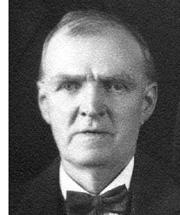
Teddy Hopkins
Born: June 24, 1860 in County Mayo or County Tipperary(?), Ireland
Baptized: unknown
Parents: Michael & Nancy (Quinn) Hopkins
Known Residences:
--- about 1881 or 1882 emigrated to America
--- 1889 at 320 Park Ave., Wilkes Barre, Luzerne County, Pennsylvania
--- 1891 at Tacoma, Pierce County, Washington
--- 1900 at 2701 Water St., Tacoma, Pierce County, Washington
--- 1910 at 2923 North Junett, Tacoma, Pierce County, Washington
--- 1920 at 2923 North Junett, Tacoma, Pierce County, Washington
--- 1930 at 2923 North Junett, Tacoma, Pierce County, Washington
Occupation: mounted police officer, machinist helper (
Death: April 3, 1935 in Tacoma; buried Calvary Cemetery, Tacoma, Pierce County, Washington.

Katherin A. "Kate" Lynch
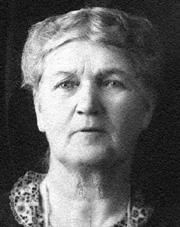
Kate (Lynch) Hopkins
Birth: May 19, 1862 in County Mayo, Ireland
Baptism: unknown
Parents: unknown.
Known residences:
--- 1881 emigration to America
--- lived with husband Teddy
Death: November 16, 1940 in Tacoma; buried in Calvary Cemetery, Tacoma, Pierce County, Washington.

Marriage & Children:

Marriage date: Teddy Hopkins and Kate Lynch married about 1884, probably in Wilkes-Barre Pennsylvania.

Children:
-- John J. Hopkins born 1885, married Florence Regan
** Anna Katheryn Hopkins born 1887, married Justin Betts "Jess" Lewis
-- Mary Jane Hopkins born 1889
-- Thomas Michael "Teddy" Hopkins born 1891, married Naomi "Mamie" Gustin

Posts about Teddy & Kate (Lynch) Hopkins
Irish Catholics in America
Tacoma in the 1890s
Teddy Hopkins: Mounted police officer
John Walsh: Relative from County Mayo
Where did our Lewis ancestors live?

Off-site Links
Tacoma Building Index (Includes Photo of 2923 No. 30th, Tacoma, built 1903 by Theodore Hopkins)
1921 Tacoma Directory listing Theodore P. Hopkins

Labels: ,


Read the rest of this post.

Mini bio: Michael & Nancy (Quinn) Hopkins

Brief biography of Michael Hopkins (1824-1914) and his wife Nancy Quinn. Position in the family tree.

Michael Hopkins:
Born: June 24, 1824 in Ireland
Baptized: unknown
Parents: Theodore & Jane (Ryan) Hopkins
Known Residences:
--- about 1885 or 1888 emigrated to America
--- 1889 at 320 Park Ave., Wilkes Barre, Luzerne County, Pennsylvania
--- 1891 at 317 S 27th, Tacoma, Pierce County, Washington
--- 1900 at 2701 Water St., Tacoma, Pierce County, Washington
--- 1910 at 2923 North Junett, Tacoma, Pierce County, Washington
Occupation: laborer
Death: December 5, 1914 in Tacoma; buried Calvary Cemetery, Tacoma, Pierce County, Washington.

Nancy Quinn
Birth: in Ireland
Baptism: unknown
Parents: unknown.
Death: unknown (before 1900)

Marriage & Children:

Marriage date: unknown

Children:
** Theodore P. "Teddy" Hopkins born 1860, married Kate Lynch
-- possible child: Edward Hopkins (living in same household in 1889, age unknown)

Labels:


Read the rest of this post.

Mini bio: Justin Betts "Jess" & Anna Katheryne (Hopkins) Lewis

Brief biography of Justin Betts "Jess" Lewis (1883-1957) and his wife Anna Katheryne Hopkins (1887-1949). Position in the family tree.

Justin Betts "Jess" Lewis:
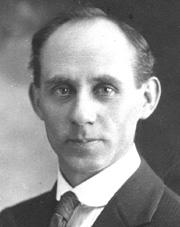
jess lewis
Born: June 20, 1883 in Pardoe, Mercer County, Pennsylvania
Baptized: unknown
Parents: Richard & Sarah (Betts) Lewis
Known Residences:

--- 1883-1885 in Pardoe, Mercer County, Pennsylvania
--- about 1888 in Slidell, St. Tammany Parish, Louisiana
--- about 1891 in Carbonado, Pierce County, Washington
--- 1900 in Carbonado, Pierce County, Washington
--- about 1901 in Tacoma, Pierce County, Washington
--- 1910 at 3009 North Junett, Tacoma, Pierce County, Washington (next door to in-laws)
--- 1920 at 2923 North 30th, Tacoma, Pierce County, Washington (with in-laws)
--- 1925 at 935 Clinton, Portland, Multnomah County, Oregon
--- 1930 at 9 East 45th, Portland, Multnomah County, Oregon
--- from mid 1930s at 2748 S. E. Market St. Portland, Multnomah County, Oregon
Occupation: plumber/plumbing contractor
Death: March 16, 1957 in Portland; buried in Tacoma Mausoleum, Pierce County, Washington

Anna Katheryne Hopkins
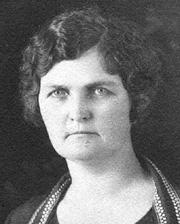
Anna (Hopkins) Lewis
Birth: April 6, 1887 in Wilkes-Barre, Luzerne County, Pennsylvania
Baptism: unknown
Parents: Teddy & Kate (Lynch) Hopkins
Known residences:
--- 1900 at 2701 Water St., Tacoma, Pierce County, Washington
--- 1909-1945 lived with husband Jess
Death: March 30, 1949 in Portland, Oregon; buried at Calvary Cemetery, Tacoma, Pierce County, Washington

Marriage & Children:

Marriage date: Jess Lewis & Anna Hopkins married April 21, 1909 at St. Patrick's, Tacoma, Pierce County, Washington. Witnesses: John J. Hopkins, Cecilia Clancy

Children:
-- baby girl (stillborn) born 1910
** Kathleen "Kay" Lewis born 1913, married Leland "Lee" Kolm

Posts about Jess & Anna (Hopkins) Lewis

The Lewis Family in Slidell, Louisiana
World War I Draft Registration
Justin B. Lewis: Plumbers' Organizations
School for the Lewis Children in Carbonado, Washington

Off-site Links
Tacoma Building Index (Justin B. Lewis listed at 3009 No. Junett, built 1905, in 1910)
1921 Tacoma City Directory listing Justin B. Lewis and Sarah B. Lewis (widow of Richard)

Labels: ,


Read the rest of this post.